
Be sure to visit our IEP webpage to see how Goals and Objectives fit into the IEP process.
Where do goals fit into the IEP process?
Goals are developed based on the strengths and weaknesses included in the PLAAFP Statement. Then the IEP team determines what supports and services will be provided for the student to reach their goals.
What is the difference between goals and objectives?
The Annual Goal identifies the major skill or behavior the student is expected to master by the end of the IEP year, while Short-Term Objectives break that goal down into smaller, measurable sub-skill steps.
- Measurable Annual Goals MDE
- Measurable Annual Goals and Short-Term Objectives—Substantive Compliance MDE
GOALS
The IEP goals are the specific skills or behaviors that the student will master in one year’s time.
Annual goals are like a road map. Where’s the child heading this year? What will he or she work on, both academically and in terms of functional development? What does the IEP team feel the child can achieve by the end of the year–again, academically and functionally? A well-written goal should be (a) positive, and (b) describe a skill that can be seen and measured. It answers the questions:
Who?. . . will achieve?
What?. . . skill or behavior?
How?. . . in what manner or at what level?
Where?. . . in what setting or under what conditions?
When?. . . by what time? an ending date?”
OBJECTIVES
Annual goals are aligned with the grade-level content standards, and short-term objectives serve to scaffold the specific skills required for progress toward the annual goal. Short-term objectives play a critical role in helping students meet grade-level standards by breaking down annual goals into manageable, skill-specific steps. Short-term objectives serve as a clear framework for guiding instruction and tracking progress ensuring students acquire the foundational skills needed for sustainable achievement.
How do we write good goals for the IEP?
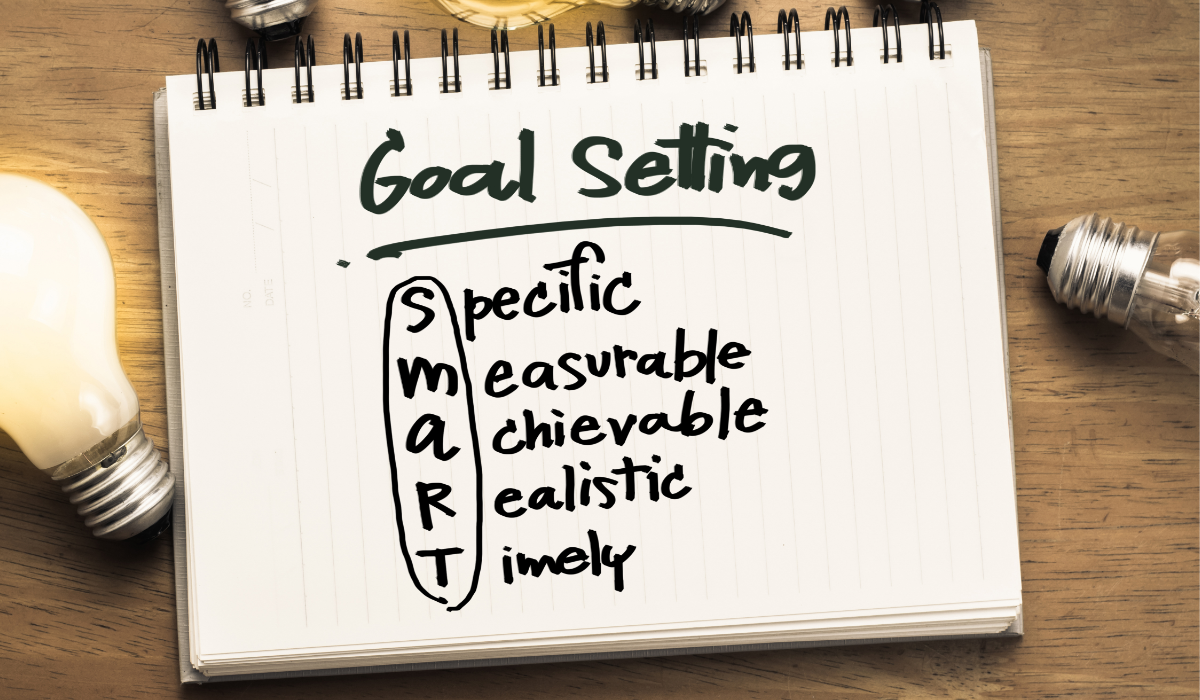
The term SMART is an acronym to remember that goals should be specific, measurable, attainable/action words, are realistic and relevant, and time-limited.
S Specific (exactly what do you want to accomplish)
M Measurable (something you can count or observe)
A Attainable/Action words (choose a goal that can be reached and uses action words that tell what the student will be able to do)
R Realistic and relevant (goals that are meaningful to the individual student)
T Time limited (how long will it take to reach goal, when will progress be measured)
These four elements should be in every goal statement
- Current Level – What can the student do today?
- Specific Skill – What exactly is being taught?
- Target/Outcome – What does mastery look like?
- Method of Measurement- How often and with what tool will they measure it?
How will I know the extra help is working?
The information on how well a child must perform and how his or her progress will be measured is often called evaluation criteria. Well-written evaluation criteria are part of objective, measurable terms.
For example, a child might be required to perform a task “with 90% accuracy” or get 18 out of 20 words correct in each of 5 trials. These are concrete numbers or scores, establishing what the IEP team considers an acceptable level of performance or progress for the child.
In other instances, progress may not be measured in number scores, such as statements. Other ways of checking progress may include:
- reviewing class work and homework assignments;
- giving quizzes, tests, or teacher-made assessments; and
- giving informal and/or formal assessments (the QRI or Woodcock-Johnson, for example).
Setting High Expectations
Endrew F. v. Douglas County School District was a United States Supreme Court case that held that IDEA (Individuals with Disabilities Education Act) requires schools to provide students an IEP (Individualized Education Program) that is “reasonably calculated to enable a child to make progress appropriate in light of the child’s circumstances.” The Court additionally emphasized the requirement that “every child should have the chance to meet challenging objectives.”
The IEP must include annual goals that aim to improve educational results and functional performance for each child with a disability. This includes a meaningful opportunity for the child to meet challenging objectives. Each child with a disability must be offered an IEP that is designed to provide access to instructional strategies and curricula aligned to both challenging State academic content standards and ambitious goals, based on the unique circumstances of that child.
Even if a child is behind, their goals should still be aligned with grade-level content standards, not their ability level, to help close the learning gap.
Is my child is on track to master their IEP goals?
Data is kept and reported to help keep your child on track to meet their goal within the identified timeline. Because objectives break the year down into smaller chunks, they allow parents and teachers to see within weeks—not months—if a specific teaching strategy is working or if the IEP needs to be adjusted.
- Read more about this on our Progress Monitoring webpage.