
Be sure to visit our IFSP webpage to learn more about the IFSP process.
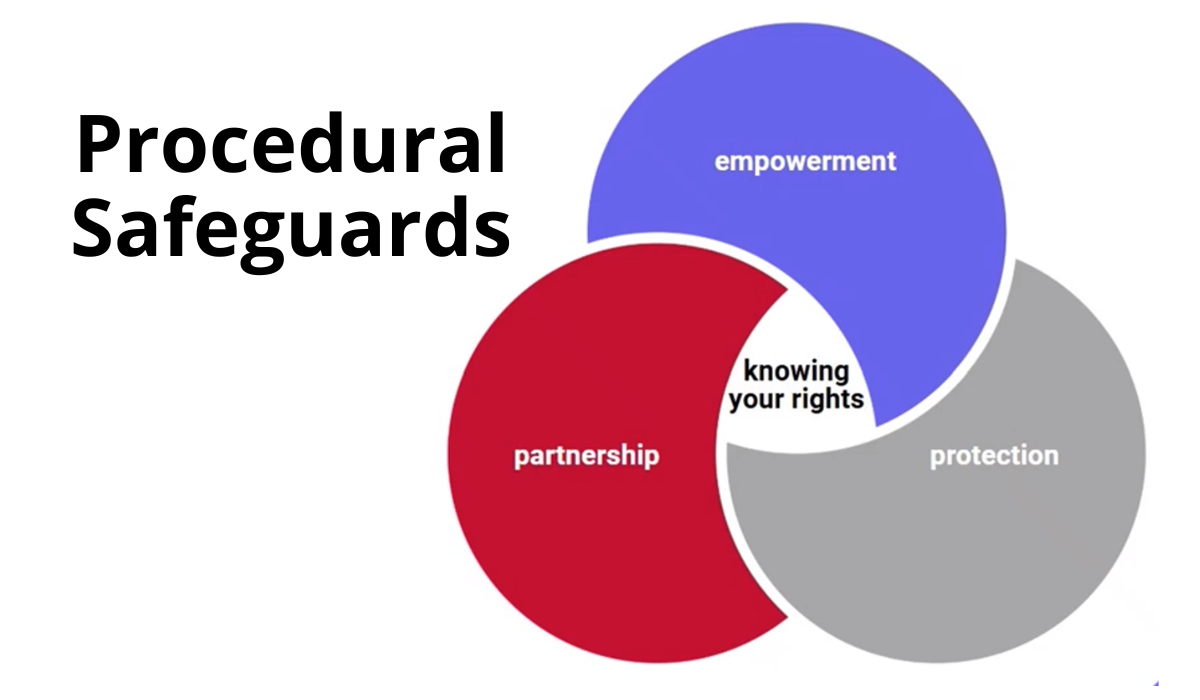
As the parent of a child who is or may be eligible for Early On, you have rights. Procedural safeguards are the checks and balances that are built into the system. Procedural safeguards are part of the federal law called the Individuals with Disabilities Education Act (IDEA). Part C of IDEA covers services for children under 3 years old. Their purpose is to guard your rights and ensure that the process happens as it is supposed to for you and your child.
- Early On Michigan Family Rights- At a Glance (English)
- Early On Michigan Family Rights- At a Glance (Arabic)
- Early On Michigan Family Rights- At a Glance (Spanish)
So why is this important? How does it help your child? When you know your rights, you’re able to be an equal participant in the Individualized Family Service Plan/Individualized Education Program (IFSP/IEP) process, and you know how to disagree when something isn’t working.
Early intervention and special education supports for families with infants and toddlers (birth through age 3) are written out in a document called the Individualized Family Service Plan. You can ask your service coordinator for a copy of your local ISFP form.
Procedural safeguards are part of the federal law that mandates special education and early intervention services, the Individuals with Disabilities Education Act (IDEA). Part C of IDEA covers services for children under 3 years old. Special education services in Michigan are covered by the Michigan Administrative Rules for Special Education (MARSE).
- Early On Procedural Safeguards Protecting Families Rights (English)
Early On Procedural Safeguards Protecting Families Rights (Arabic)
Early On Procedural Safeguards Protecting Families Rights (Spanish)
Michigan’s Part C procedural safeguards explain your family’s right to:
- Timely start of services
- Right to Decline Services
- Confidentiality
- Informed Consent
- Access to Records
- Evaluation
- Individualized Family Service Plan
- Written Prior Notice
- Information given to you in your native language
- Service Coordination
- Natural environments
- Transition Planning
You can request a printed information on your rights from your service coordinator.
Another important right for parents is the ability to disagree. Maybe you’re not being heard, or the plan isn’t being followed, or you don’t agree with decisions that have been made. What can you do?
- Informally – Working with your service coordinator, discuss what you are not happy with. Documenting the issues and proposed solutions on a worksheet can help keep everyone on track.
- Informally – Express your concerns to the Early On Coordinator for your county, if you have concerns that you cannot resolve with your Service Coordinator.
- Mediation/Facilitation – If you don’t think you are being listened to, you can get an independent organization to help. Special Education Mediation Services (SEMS) has free services (no cost to families or the school/Early On) to help work out your differences. SEMS can provide a neutral facilitator to run a meeting (this is called facilitation) and also offers mediation to resolve disputes related to special education and early intervention services.
- Formal Complaint – If you think your rights have been violated or that the law is not being followed, you have the right to file a state complaint or request a due process hearing. Parents might worry about filing a complaint. There are organizations that can help you through the process, including Michigan Alliance for Families at 1-800-552-4821, Disability Rights Michigan at 1-800-288-5923, or your ISD’s Compliance Officer.
More information: